
Ergonomic Solutions for 24/7 Control Room Operators
Research consistently shows that poor sightlines, excessive glare, repetitive head movement, noise, and inefficient layouts compound operator strain.
Ergonomic Solutions for 24/7 Control Room Operators
Control room operators working around the clock face sustained physical and cognitive demands. Long shifts, high mental workload, and continuous monitoring can disrupt alertness, slow response times, and increase the risk of fatigue-related errors—especially in utility and process control environments where reliability is critical.
Research consistently shows that poor sightlines, excessive glare, repetitive head movement, noise, and inefficient layouts compound operator strain. These factors highlight the importance of human-centered control room design that prioritizes ergonomics, visibility, and adaptability to support operators throughout long shifts.
Workstations for Continuous Operations
Effective control rooms integrate complex systems into a cohesive, operator-friendly environment. Console layout, display positioning, furniture, lighting, and environmental conditions all work together to shape operator performance. When these elements are aligned, operators can maintain focus, situational awareness, and comfort—even during extended or high-pressure operations.
Key ergonomic principles include:
- Supporting neutral posture and minimizing unnecessary reach or movement
- Ensuring clear sightlines to task-critical displays
- Reducing glare, visual clutter, and repetitive motion
- Allowing workstations to adjust for different operators across shifts
Displays, Visualization, and Situational Awareness
Clear data visualization is essential for effective decision-making. Operators must be able to quickly interpret information, whether they are interacting directly with systems or monitoring broader operating conditions.
Well-designed control rooms distinguish between:
Task-focused information, which must be immediately accessible at the operator workstation
Situational awareness information, which can be shared across the room to support coordination and rapid response
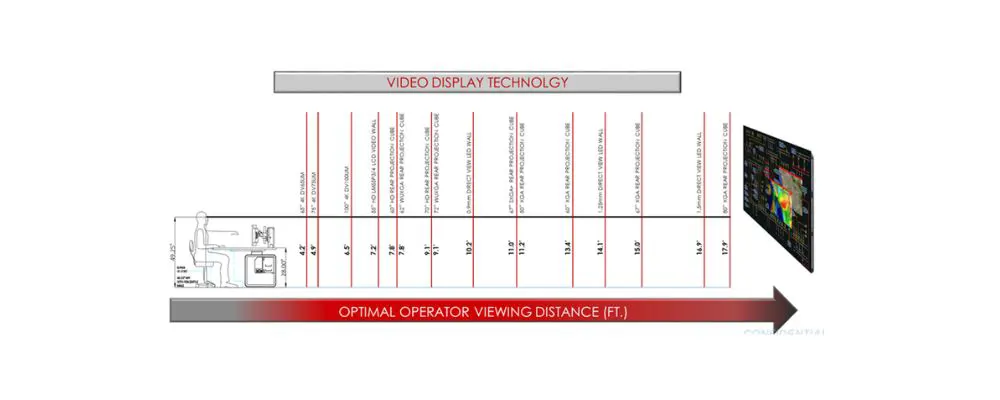
Display size, resolution, placement, and viewing distance all influence visual comfort and fatigue. Poor alignment or overcrowded screens can force operators into awkward postures or excessive head movement, increasing strain over time.
- Operator consoles and chairs are among the most critical ergonomic investments in a 24/7 control room. Consoles must support multiple displays, house technology efficiently, and remain comfortable and durable under constant use. Seating should be designed specifically for continuous operations, offering adjustability, support, and long-term resilience.
- Sit–stand capability further enhances comfort by allowing operators to vary posture throughout a shift, improving circulation and alertness while reducing musculoskeletal stress.
Environmental Factors Matter
Beyond furniture and technology, environmental conditions play a major role in operator well-being. Lighting, acoustics, air quality, and temperature control directly affect concentration and fatigue levels. Adjustable lighting, low ambient noise, effective ventilation, and thoughtful traffic flow help create a workspace that supports sustained performance rather than undermining it.
Supporting Alertness Over Long Shifts
Even the best-designed control room benefits from operational practices that acknowledge fatigue. Regular breaks, task variation, and awareness of workload intensity all help operators maintain performance over time. Small adjustments—such as encouraging brief posture changes or reducing visual strain—can have meaningful impact during long or overnight shifts.
Because Trust Can’t Wait: Partner with Winsted
Ergonomic control room design is not just about comfort—it’s a foundational element of safety, reliability, and performance in mission-critical operations. By prioritizing human factors alongside technology, utilities and process control facilities can reduce fatigue, improve situational awareness, and help operators stay focused when it matters most.
Explore how an operator-centric approach and modular console solutions can deliver resilience, scalability, and performance for years to come.