THE DESIGN MATTERS GROUP
We Understand Control Room Issues Better than Anyone
Design Matters creates custom control room designs for installations across the U.S. and internationally. We serve industries including Oil & Gas, Pipeline, Electric Utilities, Process Control, Pulp & Paper, Real-Time Crime Centers, Public Safety, Security, Military, and the Department of Defense.
Our objective is to design rooms that minimize disruptions and distractions, keeping operators alert and focused. We improve productivity by increasing efficiency and accuracy - reducing risk while enhancing performance. Our designs create high-quality work environments that support operator well-being, improve safety, drive strong performance, and reduce turnover. Finally, our proven process shortens project timelines by clearly defining the facility scope upfront, helping eliminate costly construction change orders and delays.
GET TO know design Matters

Collaborative control room designs for installations both in the US and abroad. Serving many industries including Oil & Gas, Pipeline, Electric Utilities, Process Control, Technology-based companies, Military and DoD.

Our deep operational expertise, paired with a rigorous, data-driven process, enables us to understand your unique challenges. We identify risks, measure performance gaps, and implement solutions with lasting impact.

Designing a control room goes far beyond room layout, we evaluate more than 100 measurable variables that directly influence operator focus, distractions, and overall performance in safety-critical environments.

We invest meaningful time on site with clients to fully understand their operations, allowing us to identify what’s working and what needs improvement to enhance safety, efficiency, and performance.
"Observing and understanding when and where a Control Room might be experiencing these issues is critical."
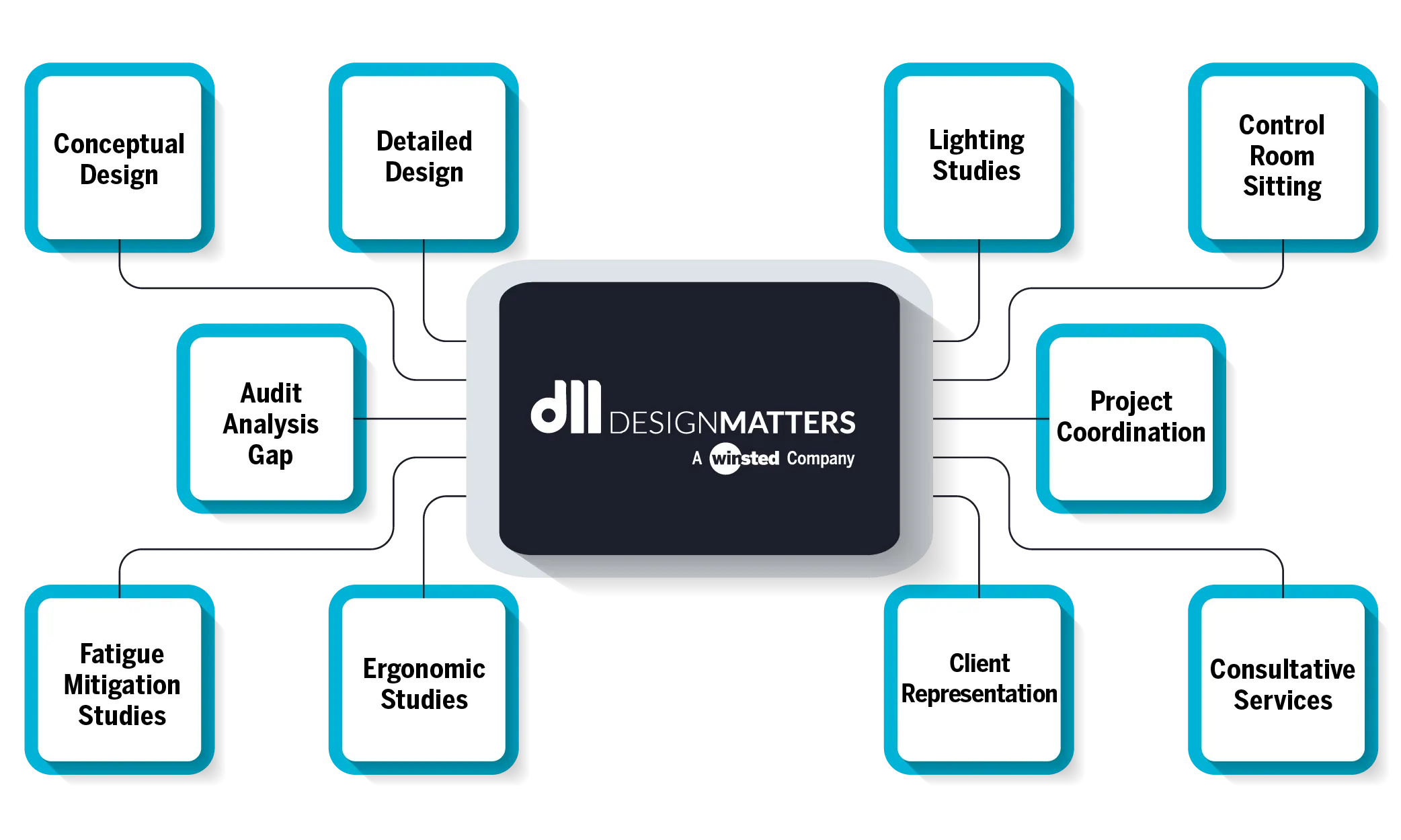
COLLABORATIVE DESIGN SERVICES
Our process can be leveraged at many stages of design or renovation, and our individual services can also be utilized as needed for specific applications.
Our Process
Our proven process shortens project timelines by clearly defining the facility scope upfront, helping eliminate costly construction change orders and delays.
Interviews, Observations, and Measurements
This process begins with our Gap Analysis.
This study highlights those areas within the existing control room that work well and those that need to be addressed through design and/or consultative solutions.
ISO 11064 is a baseline MINIMUM that creates a starting point for control room layout, because, no universal standard can account for the unique needs of individual rooms. The process employed by Design Matters begins with multiple 12-hour days on site, observing operator requirements and habits, interviewing operators, supervisors, managers, as well as anyone else that impacts the control room operation. We track traffic patterns, observe Operator interactions, communications, shift changes, meetings and processes. We measure control room conditions through Time and Motion Studies, decibel level analysis, light level readings, glare and reflection identification, and other measurements of fatigue causing elements in the environment.
Quantified Analysis
Our observations are further quantified through operator interviews as well as understanding regarding past, present, and future intentions for the control room in question. This information is combined with our own custom-developed listing of 100 critical elements that must function properly in control room environments. Completion of this analysis creates a very comprehensive picture of the needs of a specific control room.
Design Recommendations Delivered
Findings are submitted in a report containing an organized breakdown of all observations, as well as a comparison to Industry Standards and Best Practices. Design recommendations are included in the report, as well as data and projections to support the assumptions of the design. Final designs take into account current needs as well as possible growth or changes in the foreseeable future.
Whether we are providing a simple test-fit, conceptual, schematic, design development (DD) or construction level drawing (CD), the information we collect in our Gap Analysis forms the basis for both our design as well as our consultative services.
Our Results
Providing informed guidance, best practices, and industry standards, as well as new trends to provide recommendations for current and future needs.
Improved Outcomes
Properly designed and functioning control rooms provide increased efficiency and operator accuracy, resulting in lower operating costs and a safe working environment both inside and outside of the control room. These results show themselves both in terms of cost savings and in improved morale and reduced turnover and training.
Increased Safety
Safety is everyone’s number one objective in the control room, but safety concerns aren’t always clear. Spotting potential issues early and/or reacting quickly and correctly before they become dangerous situations protects personnel, the community, the environment, equipment and overall productivity. By communicating clearly and staying focused, your Operators can ensure the safety of personnel, visitors, contractors and the general public.
Fatigue Mitigation
Most operator errors in a control room are immediate errors or fatigue-related errors. Identifying the root causes is the first step in mitigating fatigue in your control room. Design Matters has a proven track record of helping control rooms reduce fatigue problems.
Smarter Building
A well-designed control room is not by definition expensive to build. In fact, a room designed for a specific use rather than to a general standard will avoid unnecessary expense. Additionally, a flexible design which allows for future changes and expansion will typically result in reduced build costs over the long term.
Protecting Investment
Large SCADA and DCS investments can be placed in jeopardy if the human element is not performing adequately. While most installations function without incident over 99% of the time, unplanned events do arise, and this is when people, equipment, and facilities are in the most jeopardy. By preventing damage, injury, and downtime, investments in a proper control room see a return in just a few moments.
Better HR Outcomes
The best environments will help to attract and retain top performing operators, reducing costs associated with administration, hiring, and training. Employee longevity also enhances company culture and morale, creating an environment where top talent in all areas of operation will desire to work. Also, some control room projects may involve a big process deviations from how they currently operate. It is critical to be able to effectively communicate why these changes are needed and how these changes can improve their productivity, safety, efficiency, and overall health and well-being.
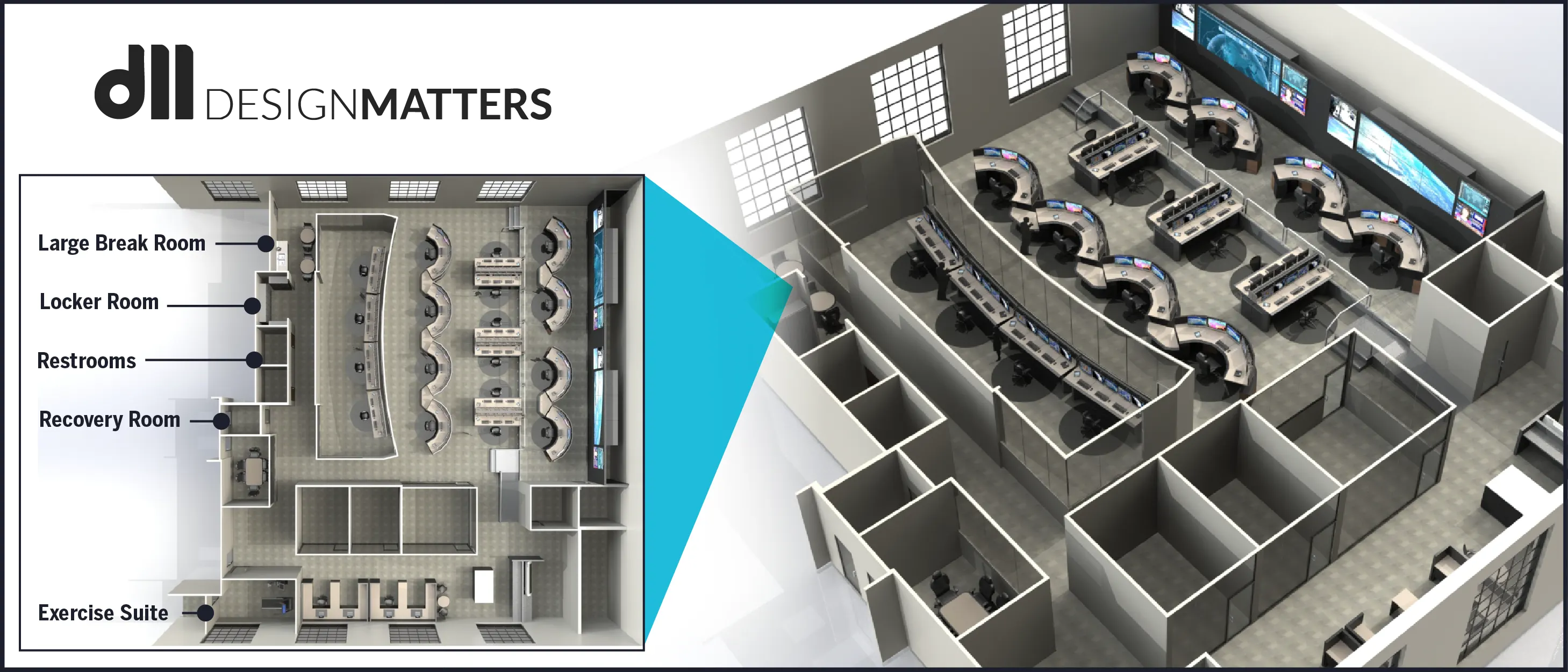
Superior Results
Providing informed guidance, best practices, and industry standards, as well as new trends to provide recommendations for current and future needs.
EXTENSIVE EXPERTISE
Design Matters combines deep operational research, industry standards, and real-world observation to design control rooms that maximize operator performance, efficiency, and accuracy.
Control room design requires a deep understanding of the unique environment in which operators and controllers work, as well as the many factors that can affect their performance. Knowledge of how space planning, lighting, acoustics, technology, fatigue mitigation, operator interactions, workflow efficiency, architecture, and other elements function together within a specific set of tasks is critical.
With experience spanning more than 450 control room projects, Design Matters is recognized as a leader in this highly specialized design process. Most control rooms function reasonably well under normal circumstances, and the need for specialized design is not always obvious. But in crisis mode, operators must be highly aware in their observations, accurate in their responses and control rooms must operate at the most efficient level possible. These times are when indecision, poor decisions, miscommunication, or missed information can have catastrophic outcomes.
To achieve the highest levels of accuracy and efficiency, we begin with the ISO 11064 control room design standard as our foundation. Through direct observation, the application of best practices and industry standards, and our own specialized design methodology, we develop a unique solution for every control room. Our approach considers the current operation of your control room, past lessons learned, future operational needs, and anticipated technological advancements on the horizon.
Our observation method often reveals poor structures and habits that do not seem harmful on an everyday basis but can lead to serious consequences during critical events. To fully understand your needs, our team spends both days and nights observing your current operations. We conduct individual interviews with all operators, supervisors and others who directly impact the control room. We conduct time and motion studies to measure fatigue-causing events, and capture current room conditions, including lighting, noise, traffic, and interruptions.
Design Matters’ methodology combines our comprehensive data collection process with our vast experience and input of your team to ensure that all needs and perspectives are represented. Everyone that works within or supports the control room is given an opportunity for input and buy-in to the decisions being made. The result is a best-in-class control room design that supports optimal performance and creates a working environment where people feel a sense of pride, ownership, and commitment.
Design Matters: Built on Insight
Combining deep data collection, industry expertise, and stakeholder input to create control rooms designed for performance, ownership, and long-term success.
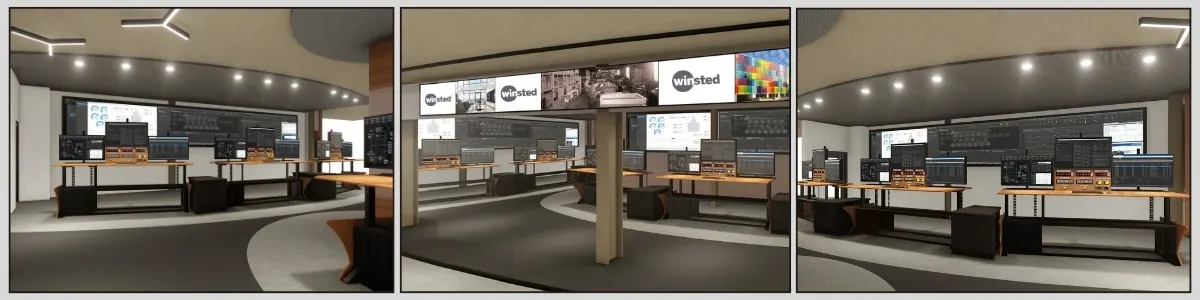
Steve Whitley & Team
Our team of experts is uniquely qualified to address control room design in a way that simultaneously addresses the big picture and the important details.
Steve has more than 30 years of experience in 24/7 Mission Critical control room design and consulting. Our exceptional experience comes from a team which collectively possesses over 1,000 control rooms of experience across a wide spectrum of industries and applications. Utilizing our unique methodology and our ‘100 Critical Element’ design criteria, we provide subject matter expertise that goes well beyond the ISO 11064 standard for control room design. Design Matters is able to provide informed guidance taking into account best practices and industry standards, as well as new trends to provide recommendations for current and future needs.

President

Architect | AIA
A FEW OF OUR CLIENTS
Our Company is Defined by the Company We Keep